
Nieuwegein Fashion · Growth edition
White Denim Shorts

By Lotte Visser
Choose white denim shorts by checking fit, coverage and movement before thinking about outfits. The colour makes pocket outlines, seams and underwear more
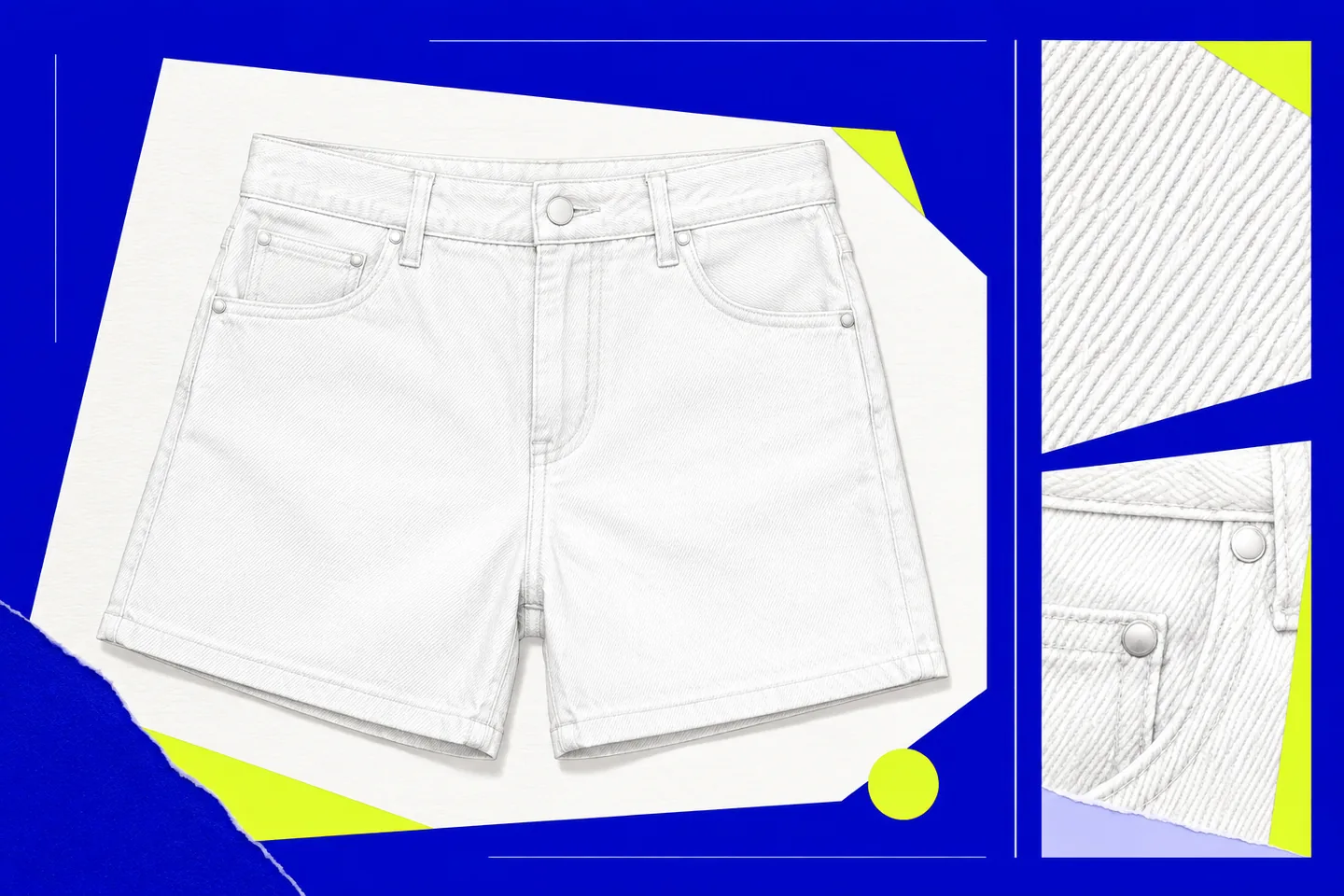
Choose white denim shorts by checking fit, coverage and movement before thinking about outfits. The colour makes pocket outlines, seams and underwear more noticeable, so a pair that looks fine on a hanger may behave differently when worn. Try them in daylight, sit down in them and check the back as well as the front.
Start with how you expect to wear them. For walking, travel or everyday errands, look for room through the seat and thighs. For a neater outfit, choose a secure waistband and a clean hem. Structure does not require a tight fit: the fabric should fall smoothly without pulling across the hips.
Check the fit in motion
The waistband should stay in place without digging in when you sit. Fasten the shorts normally rather than pulling them into position for the mirror. If the waist fits but the thighs feel restricted, try a different cut. Simply choosing a larger size may leave a gap at the back without solving the shape problem.
Test the rise with a top you already wear. A higher waistband gives a tucked shirt a clear stopping point; a mid-rise pair may suit tops worn loose. Neither is automatically more comfortable. Check whether the front presses into your stomach when seated and whether the back provides the coverage you want when bending.
Walk several steps, climb a stair if possible and sit on a chair. Watch for the hem riding up or the crotch pulling. Empty pockets should lie reasonably flat. Horizontal tension lines around the fastening or seat are a reason to compare another size or cut, especially if movement feels restricted.
Judge length while seated as well as standing. A longer leg can provide more coverage, but a narrow opening may still restrict your stride. A shorter pair needs enough room to move without constant adjustment. If your thighs rub during walking, check whether the inseam covers the contact area throughout a normal step.
Assess fabric and opacity
Denim has a diagonal twill structure, but its weight and softness vary. Firmer cloth can hold a defined outline; softer denim may drape more closely. Lightweight fabric is not necessarily transparent, and heavy fabric is not necessarily comfortable in heat. Assess the actual garment rather than relying on a description such as thick, premium or summer weight.
Read the fibre label. Cotton denim with elastane can stretch during movement, while rigid denim offers less give. Stretch does not compensate for a poor fit: if the cloth is pulled taut across the seat, it may reveal more than it does when relaxed. Check how the knees-up sitting position changes both comfort and coverage.
Try the shorts with the underwear you intend to wear, preferably in natural light. A shade close to your skin tone may be less conspicuous than bright white, although seams and texture can still show. Look at the seat, fly and pocket bags from several angles. Holding fabric towards a window is useful for comparison, but the wearing test matters more.
Inspect belt loops, pocket corners and the fastening for loose stitching or distortion. Check whether pocket bags bunch when you sit and whether a phone pulls one side down. For stretch denim, gently extend a small section and release it to see whether it returns promptly. This is a comparison check, not a guarantee of long-term shape retention.
Washing and finishing treatments can alter denim's softness, appearance and shrinkage. The Indian Textiles Committee’s denim-washing guide provides technical background. When choosing shorts, compare how each finished fabric feels and falls rather than assuming that distressed or prewashed denim will behave in one predictable way.
Choose a practical hem
A sewn hem gives a defined edge and suits shirts, plain knits and simple footwear. A turn-up adds thickness at the leg opening; check that it stays comfortable when seated. A raw hem is more informal and may continue to fray. Examine how close loose threads are to seams before trimming anything.
If you plan to shorten the shorts, try the proposed length with a temporary fold first. The leg opening may become wider higher up the thigh, changing the silhouette. Avoid cutting immediately after trying on an unwashed pair if the care label indicates possible shrinkage. A small alteration should solve a specific fit issue rather than rescue several problems at once.
Put outfits together with what you own
Use colour to set the level of contrast. Navy, black, olive or brown tops give white shorts a clear outline. Pale blue, grey and cream create a softer combination. If two whites look awkward together, separate them with another colour or choose an obvious difference in texture, such as a ribbed knit against smooth denim.
Match proportions through small adjustments. With relaxed shorts, try a closer-fitting top or tuck enough of a loose shirt to show the waistband. With straighter shorts, an untucked linen shirt can provide room without adding bulk at the waist. Check the side view: a thick tuck may create a lump over the fastening.
Three straightforward combinations cover different uses:
- Walking and errands: a cotton T-shirt, relaxed shorts and comfortable trainers. Add an open overshirt for coverage when the temperature drops.
- An informal lunch: a loosely tucked shirt, clean-hem shorts and flat sandals. Keep the belt slim enough to sit comfortably beneath the shirt.
- A cooler evening: longer shorts, a fine knit and loafers. Try a lightweight jacket over the combination and check that its hem does not catch the shorts' pockets.
Choose footwear for the distance and surface you expect to cover. A more structured shoe can make an outfit look neater, but it cannot make shorts suitable for every setting. Check any relevant dress requirements separately. Before buying, assemble a few combinations from your existing clothes; this reveals whether the rise and hem work with your wardrobe.
Wash and treat marks carefully
Follow the garment's care label, including instructions for trims or stretch fibres. Empty pockets, close fastenings and separate white denim from items likely to release dye. Where the label permits, a cool, gentle wash and air-drying are options. General background is available in Levi’s denim-care guidance; the instructions attached to your own shorts take priority.
For a small mark, blot away excess material before rubbing it further into the weave. Use a treatment suitable for the stain and permitted by the care label, testing an inconspicuous area first. Avoid assuming every stain needs the same method. Work gently: forceful scrubbing can roughen the surface and leave a visibly different patch.
Check the marked area after washing and before applying heat, which can make some stains harder to remove. Do not use bleach unless the care instructions allow the particular type. More detergent is not a substitute for appropriate treatment; follow its dosing instructions and rinse thoroughly. Store the shorts fully dry in a clean space.
Before you decide
- Sit, bend and walk without adjusting the waistband or hems.
- Check coverage in daylight with your usual underwear.
- Inspect pocket outlines, seams and fastening tension.
- Try the rise with both tucked and untucked tops.
- Confirm that the care routine suits your laundry habits.
- Choose another cut if comfort depends on standing perfectly still.