
Nieuwegein Fashion · Growth edition
Basketball Shorts for Men

By Lotte Visser
Good basketball shorts should stay secure at the waist, allow a full stride and release heat without feeling flimsy. The right choice depends on where they
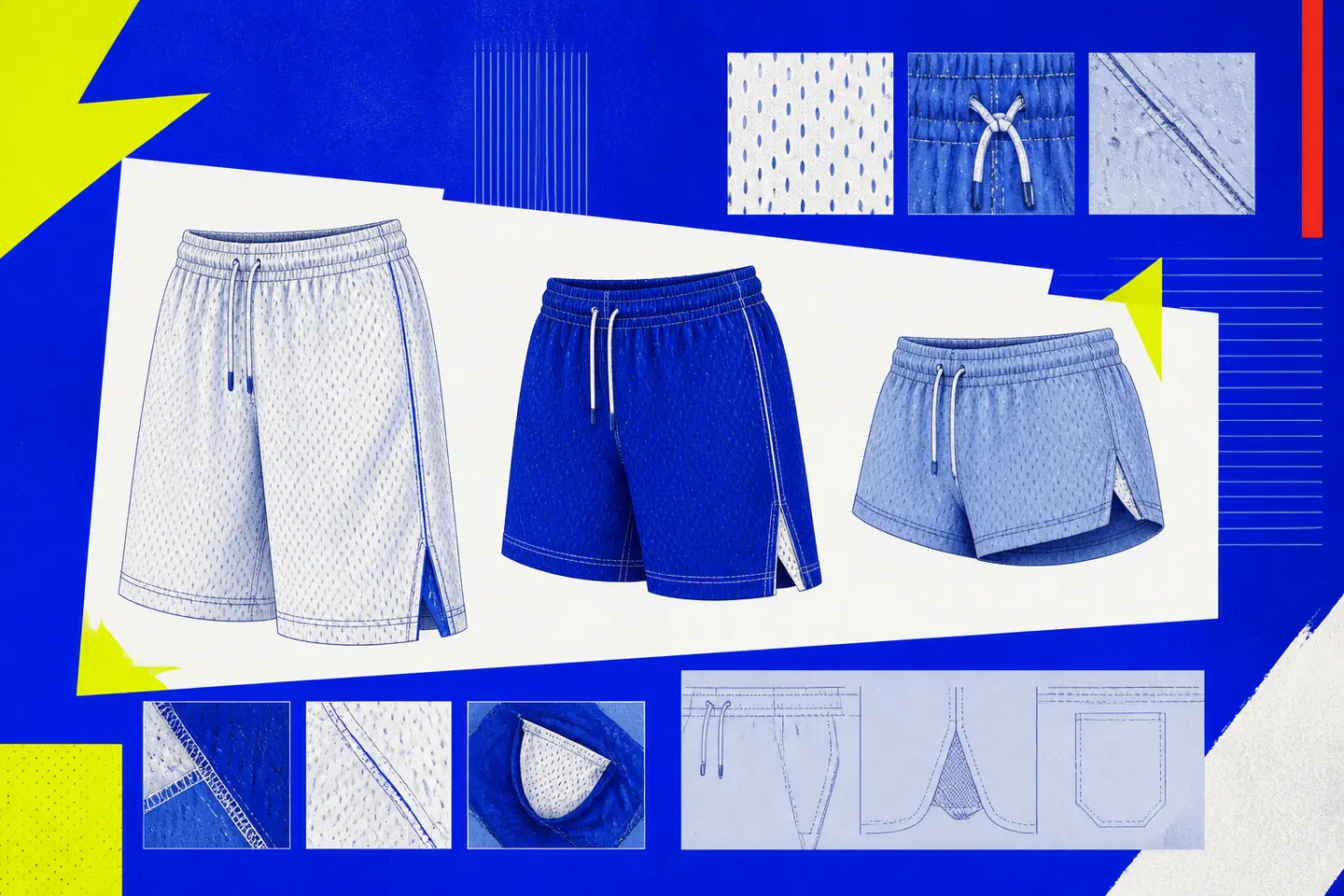
Good basketball shorts should stay secure at the waist, allow a full stride and release heat without feeling flimsy. The right choice depends on where they will be worn. Competitive play, gym training and everyday use place different demands on length, fabric and storage, so begin with function rather than colour or decoration.
Start with movement and fit
A basketball cut should leave room through the seat and thighs without hanging so loosely that fabric catches around the knees. Test the fit with movements that resemble play: squat deeply, raise each knee, take a long lateral step and jump. The waistband should remain in place, the hem should not pull sharply upwards and the crotch should not feel tight.
Common inseams include 7, 9 and 11 inches. A 7-inch inseam usually finishes above the knee and reduces the amount of fabric moving around the leg. A 9-inch inseam provides more coverage while remaining manageable for most training. An 11-inch inseam creates a longer silhouette, but it can feel cumbersome if the hem reaches the knee during a deep bend. These measurements describe the garment, not where it will finish on every body.
Rise matters as much as inseam. Shorts worn at the natural waist sit differently from a low-rise pair, even when both list the same length. Check the product measurements and compare them with shorts that already fit. A practical explanation of how basketball shorts should fit can help clarify the balance between room and control, but a movement test remains more useful than the size label alone.
Choose a secure waistband
A wide elastic waistband spreads pressure more evenly than a narrow band. It should feel firm enough to resist slipping but should not leave a deep mark or restrict breathing. An internal drawcord gives useful adjustment and is less likely to snag. An external cord is easier to reach, although it may move around during play.
Tightening the cord should be a final adjustment, not the only thing holding the shorts up. If the waistband is loose before the cord is tied, the body of the shorts may also be too large. If the waist fits but the thighs bind, try a roomier cut rather than simply moving up a size. Basketball-short buying guidance can provide another checklist for fit, fabric, ventilation and durability.
Assess fabric and ventilation
Most court shorts use synthetic knitted fabric because it is light, resists absorbing much water and dries more quickly than heavy cotton. Mesh increases airflow, but large holes are not automatically better: hold the fabric up to light and stretch it gently to check that it remains sufficiently opaque. Smooth fabric also reduces friction where the legs or layered garments meet.
Thin fabric suits warm indoor sessions, while a slightly denser knit may tolerate rough outdoor surfaces and frequent washing better. Look at the inside as well as the outside. Loose threads, rough seam allowances and stiff labels can become irritating once the fabric is damp. Flat or neatly covered seams are preferable around the crotch and inner thigh.
Stretch should support movement without making the shorts sag. Pull the fabric across the width and release it. It should return to shape rather than remain distorted. Side vents can add room for lateral steps without requiring an excessively wide leg. If compression shorts will be worn underneath, repeat the movement test with that layer in place.
Decide whether pockets belong on court
Pockets are useful before and after training, but their contents can bounce, swing or press into the leg during movement. Open side pockets offer quick access but provide little security. Zipped pockets hold keys or cards more reliably, although a poorly placed zip can rub against the hand or thigh. An interior sleeve may control a phone during a walk to the gym, but it does not make carrying one during contact play sensible.
Inspect how each pocket is attached. The opening should lie flat, the pocket bag should not hang below the hem and the stitching should be reinforced where the opening ends. Place the intended item inside, then walk, squat and jog. For examples of different storage arrangements, compare basketball shorts with secure pocket options, while judging each design against the activity rather than treating storage as an essential feature.
Remove hard or bulky objects before drills and games. They can distract the wearer, strike another player or damage the pocket. For dedicated court use, a simple pocket-free design is often the least troublesome. For general gym use, one secure pocket can be a reasonable compromise.
Consider liners and layers
A built-in liner reduces the number of separate garments and can limit chafing, but only when its fit and seams are comfortable. The liner should sit close to the leg without pinching, rolling upwards or restricting a squat. Check that its hem ends where expected; a liner extending below the outer short may be intentional, but it changes both coverage and appearance.
Unlined shorts offer more flexibility. They can be worn alone for light activity or combined with separate compression shorts when extra coverage is useful. Separate layers are also easier to replace individually. Whichever arrangement you choose, make sure the combined waistband is not bulky and that both fabrics can release heat.
Measure before choosing a size
Use a flexible tape to measure the natural waist and the fullest part of the hips and seat. Keep the tape level and close to the body without pulling it tight. Compare those measurements with the chart for the exact garment, since size labels are not consistent between ranges.
Determine whether a chart gives body measurements or finished garment measurements. They are not interchangeable. Body measurements indicate whom the size is intended to fit; garment measurements show the dimensions of the shorts themselves. When comparing finished measurements, allow enough extra room for bending and lateral movement.
- Prioritise hip and thigh room if the waist can be adjusted securely.
- Choose the shorter option when excess fabric interferes with the knee.
- Choose more room when adding a compression layer, but retest the waistband.
- Do not assume that a familiar size label guarantees the same cut.
Check construction before buying
Examine the crotch, side seams, waistband and pocket openings, as these areas take repeated strain. Stitching should be even, with no gaps, loops or loose ends. Stretch each seam lightly; it should move with the fabric without producing cracking sounds or exposed holes. Reinforcement is useful at pocket corners and at the point where a drawcord enters the waistband.
Check opacity in bright light and while the fabric is stretched. Printed areas should flex without obvious cracking, and decorative elements should not create rough patches on the inside. Heavy trims, large patches and thick embroidery may add weight or stiffness without improving function.
Colour is mainly a practical and personal choice. Dark shades may make minor marks less conspicuous, while pale colours make it easier to notice dirt before washing. If the shorts are for a team, confirm the required colour and uniform rules before choosing details such as piping or contrasting panels.
Care for the fabric and elastic
Read the care label because fibre blends, prints and finishes can require different treatment. Empty the pockets, close any zips and turn the shorts inside out before washing. Wash damp kit promptly instead of leaving it compressed in a closed bag, where odour can become harder to remove.
Use a mild detergent and the temperature stated on the label. Fabric softener can coat some performance fabrics, while chlorine bleach may weaken fibres or alter colour, so use neither unless the care instructions permit it. Washing with abrasive garments or exposed fasteners can snag mesh and printed surfaces.
Air-drying avoids unnecessary heat. If machine drying is allowed, use the stated setting and remove the shorts when dry. Store them clean and fully dry, with the drawcord loose and the waistband unstrained. Repeated high heat and prolonged damp storage can shorten the useful life of elastic and applied decoration.
A final practical check
Before keeping a pair, wear it with the same base layer and footwear used for training. Move for several minutes rather than relying on a mirror. A suitable pair stays at the waist, clears the knee, remains opaque and does not demand repeated adjustment. Choose pockets only when they serve a real purpose, and favour sound seams and comfortable fabric over decorative extras.